If You’re Not Designing for the Ear, You’re Already Behind
What the minds behind Public Records and Stylus said about sound, obsession, and what happens when you treat acoustics as architecture. From the Bo...
BLLA Editorial Team
July 14, 2026 – 8 min read
What the minds behind Public Records and Stylus said about sound, obsession, and what happens when you treat acoustics as architecture.
From the Boutique Hotel Investment Conference, June 3, 2026 — High Fidelity: Sound as a Hospitality Vertical
The session description for this panel made a claim worth sitting with: a beautiful room used to be enough. It no longer is.
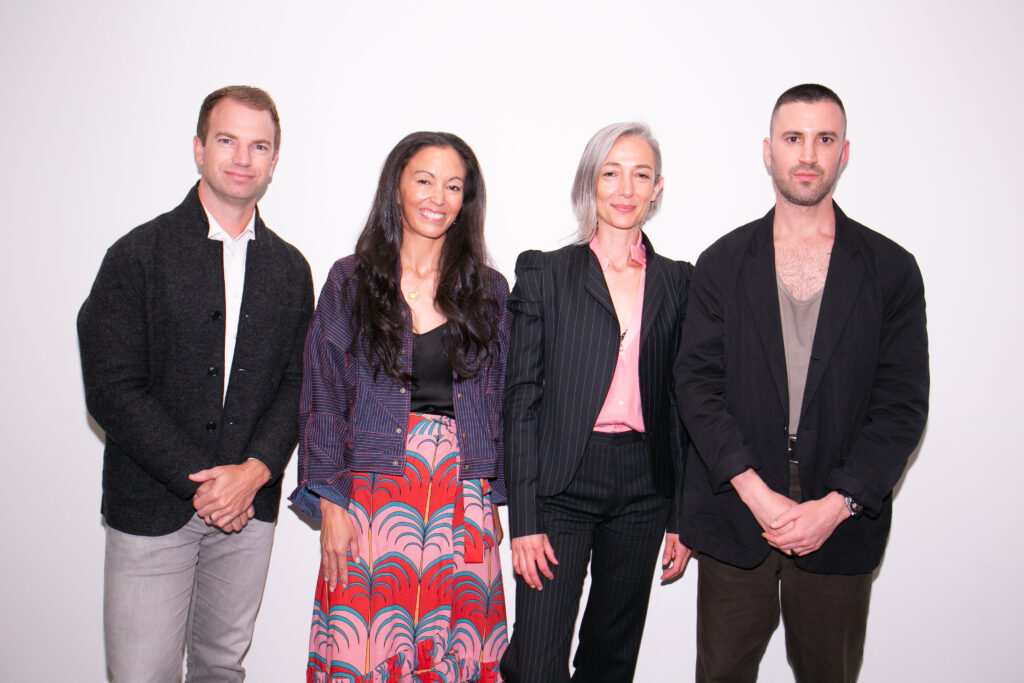
What followed was thirty minutes that made that argument feel not like a trend observation but like an obvious truth that the hospitality industry has been slow to act on. Moderated by Andrew Miele, Chief Development Officer of Proper Hospitality, the conversation brought together Shane Davis, Co-founder and Creative Director of Public Records in Gowanus, Brooklyn; Adriana Marianella, Principal and Founder of MARA; and Luisa Gui, Managing Director of Stylus NYC Inc, a forthcoming members club on the Lower East Side built around ephemeral arts, with sound at its center. None of them came to the conversation as hospitality people, exactly. That was the point.
The panel, left to right: Andrew Miele of Proper Hospitality, Adriana Marianella of MARA, Luisa Gui of Stylus NYC Inc, and Shane Davis of Public Records
How Public Records Started
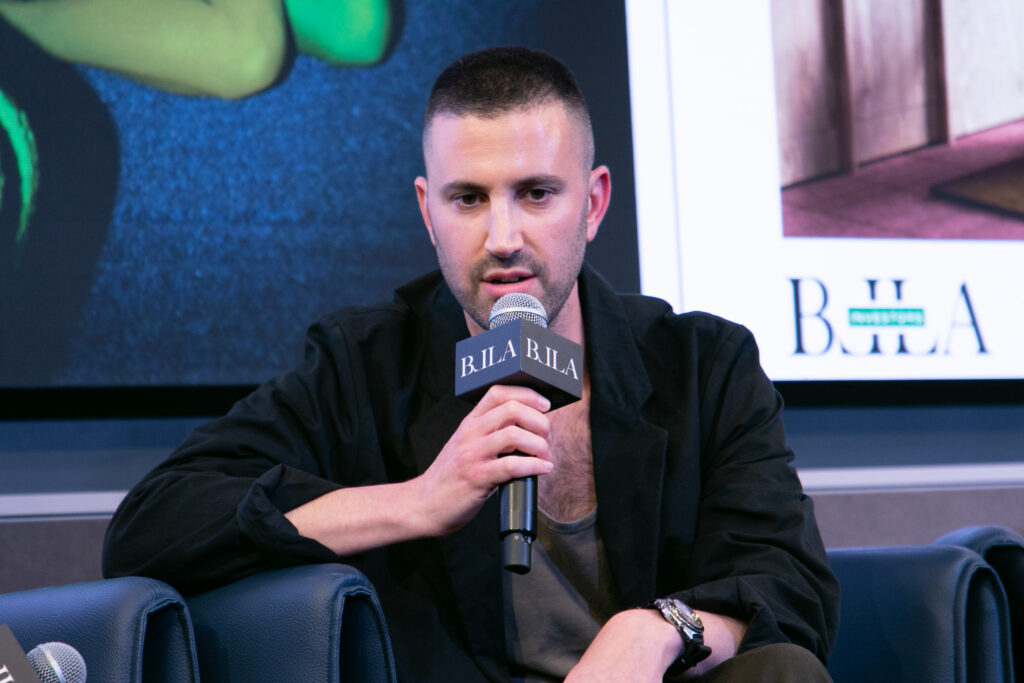
Davis described the origins of Public Records as an intention before it was a concept. He and his co-founder were interested in design, music, ecology, and creating a platform for other artists and practitioners to build on. “We sort of envisioned it as a punk rock spirit cultural institution,” he said, “which in retrospect was pretty ambitious.”
The space itself — 233 Butler Street in Gowanus, the original ASPCA headquarters, previously home to two musical instrument fabricators and a Restore — was, in Davis’s telling, the only place Public Records could have existed. The building gave them horse stables with natural light, 350-year-old trees, and a footprint that doesn’t exist anywhere else in New York. “It was this incredible sort of institutional building with an incredible architectural envelope.”
Sound was embedded in the project from the beginning, but Davis was careful about how he framed it. “Sound is clearly something that’s deeply meaningful and spiritual for us, but it’s more of part of the tapestry than the concept at its core.” Public Records opened in March 2019, and the listening room downstairs — which Davis described as a true music space, built with the rigor of a recording studio — drew significant attention. The upstairs is equally considered acoustically, but in a different register: all the acoustic treatment is integrated into forms and geometries. You don’t see it. You feel it. “How do you create this social space that hopefully you’re existing in some sort of a dream state, as opposed to an acoustic state?”
Shane Davis, Co-founder and Creative Director of Public Records
How Stylus Started
Gui traced the origins of Stylus through its founders, physician entrepreneurs whose careers straddled neuroscience and the arts. They’d built a large collection, established a foundation, and spent years bringing people together around galleries and ideas. Then Covid. Then, over the years of isolation, a building they’d purchased on the Lower East Side in 2018 — the original Loho Studios, where Patti Smith had recorded, where the Blue Man Group had later worked — became the site for something they’d been formulating: a physical place to bring people together around sound, science, and the body.
The founders built a listening room in their own home first. Gui described the process: “They invited speaker designers, acousticians, architects, and interior designers to build this space that considered every aspect.” What they learned in that room became the template for Stylus.
The construction process has been, by any measure, extraordinary. The 10,000-square-foot, five-floor building on the Lower East Side required excavating the basement to its full 100-foot length, underpinning the structure while neighbors sat on either side, and injecting cement into every original brick wall before the acoustic insulation work could even begin. “Five years of building, about 40 plus contractors and subcontractors,” Gui said. They’re opening this fall, and the room hasn’t been tuned yet.
Marianella, who came on as an advisor with Gui three or four years ago and shaped the programming concept through her work at MARA, described the concepting process as genuinely organic — weekly meetings around the founder’s kitchen table, working through what the space should be and who it should serve. “We went around, literally around the founder’s kitchen table, essentially building this program out.”
Luisa Gui, Managing Director of Stylus NYC Inc
What the Spaces Are Actually Built To Do
Stylus operates as a hybrid structure: a for-profit members club on the lower two floors, and a nonprofit supporting what they call the ephemeral arts — sound performance, film, and food. The two entities work together. The listening rooms are dual-system: an Ojas system for recorded sound, and an Amadeus Active Acoustics system embedded in the acoustic fabric of the walls and ceiling for live performance and spoken word. Michelin-starred chef Anita Lo is helming the culinary program. The bar was removed from the main listening space to preserve the acoustic integrity. (“I fought tirelessly to have a bar,” Marianella said, “but it’s a secret bar.”) On the upper floors: members lounges, terraces, and two Sonic Suites — the idea being that as you move up through the building, the experience becomes more free-form.
Davis described Public Records’ acoustic design philosophy in a way that applies well beyond his own space. The goal is never to make sound visible. “Our space upstairs is all acoustic consideration, but you don’t see any of it. We try to create things that transport people into other places and kind of stay away from gestures or visuals that connect you to anything too literal.” The aim is something otherworldly, not something that announces itself as a listening room.
On working with outside consultants: early on, Public Records partnered with Arup, the multinational acoustic firm, essentially on a pro bono basis. The arrangement was unusual and productive. “We did the technical work and understood the acoustic strategies, but then we used them as almost architectural inputs, as opposed to architectural constants.” Acoustic treatment became design language, not acoustic furniture.
On Wellness, 40 Hertz, and What Hotels Should Pay Attention To
An audience member raised the question of whether sound therapy would expand from a niche into a mainstream wellness vertical in boutique hotels. The response from Marianella and Gui suggested the science is already ahead of the industry’s awareness.
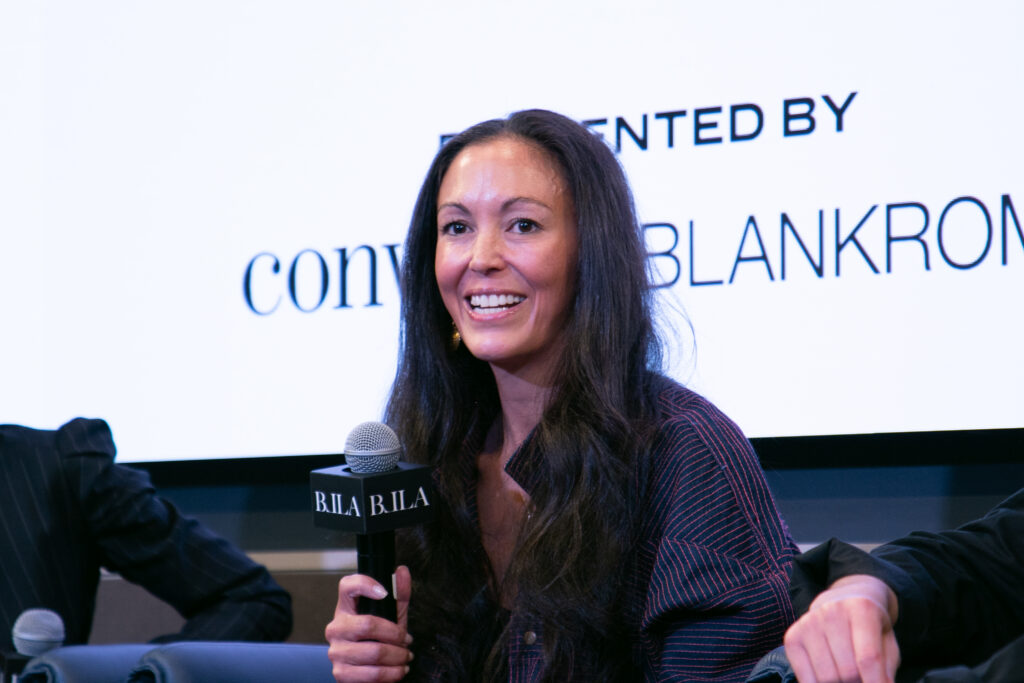
Marianella described Subliminal, a 40-hertz light and sound experience she’s developed for glymphatic drainage — essentially, a tool for brain health grounded in research coming out of MIT and Stanford. “You can listen to 40 hertz on Spotify or YouTube, but you’ll see a dramatic increase in your ability to focus.” The research has shown benefits specifically for Alzheimer’s and dementia. The argument isn’t that hotels should become medical facilities. It’s that sound, designed with this level of intentionality, intersects directly with the core function of a hotel.
Miele put it plainly: “What’s the core function of a hotel? It’s sleep. And if you can program sound correctly, sound healing is a great place to achieve that.”
Adriana Marianella, Principal and Founder of MARA
What to Build, and How
When Miele asked the panel what they’d tell someone at the early design stage of a boutique hotel, restaurant, or wellness space, Davis’s answer was the one worth keeping.
“The places that resonate with me are places that feel like they have a true sense of authorship and almost obsession. If you’re obsessed with sound and music, you can do it. But if you’re not — don’t chase the trend. Build what you really care about.” He offered the example of golf: he hates golf, but someone obsessed with it, doing it in a genuinely interesting way, might change his perspective. “Changing perspectives is really the hospitality that’s most powerful.”
Gui seconded it and pushed further: “Be genuine and passionate. Work with people you like. Never force yourself to work with people you don’t. The right vibe affects the dynamic of the team. Stay educated and curious.”
Marianella added the question she returns to at the start of every project: what do you think is missing? “What can I create for you that you would love, and what do you deeply love and cherish and value right now in the market? Those questions are really illuminating in creating extraordinary projects.”
The session closed on a note that felt less like a prediction and more like a challenge. Sound is no longer a backdrop. The operators who treat it that way are designing for a guest who is increasingly aware of the difference between a room that sounds like it was built for them and one that just looks like it was.
BLLA’s Boutique Hotel Investment Conference took place on June 3, 2026, at 237 Park Avenue, with an evening program at NeueHouse Madison Square, made possible with the support of Blank Rome and Convene Hospitality Group.