What three experts on branded residences said about deal structure, buyer motivation, and why this is no longer just a game for the major flags. Fr...
BLLA Editorial Team
July 16, 2026 – 7 min read
What three experts on branded residences said about deal structure, buyer motivation, and why this is no longer just a game for the major flags.
From the Boutique Hotel Investment Conference, June 3, 2026 — Branded Residences
Branded residential used to be a footnote in the hotel development conversation. It is now, in many cases, the reason the hotel gets built at all.
That was the opening premise of one of the conference’s most technically dense sessions — and also one of its most useful. Moderated by Ronit Copeland, Co-Founder and Managing Partner at HVS Tel Aviv, the panel brought together Tiffany Cooper, Head of Development for the Americas at Mandarin Oriental, and Samantha Ahuja, Co-Chair of the Global Hospitality Group at Greenberg Traurig. Between the three of them, the session covered definitions, deal structures, legal risk, buyer psychology, and the question of how much longer Miami can keep absorbing product before something gives.
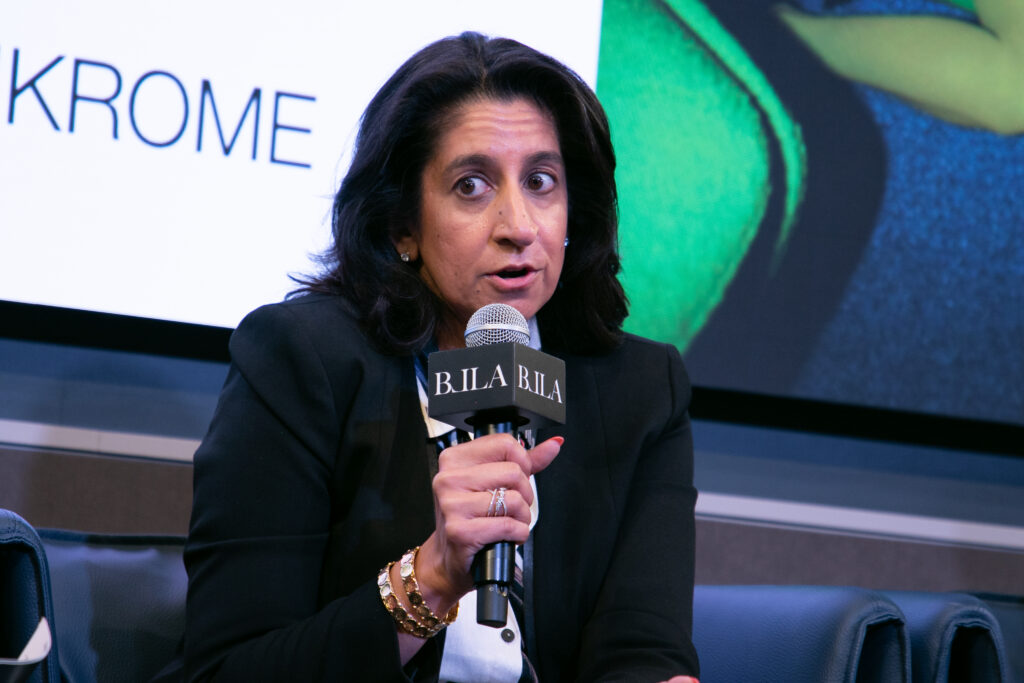
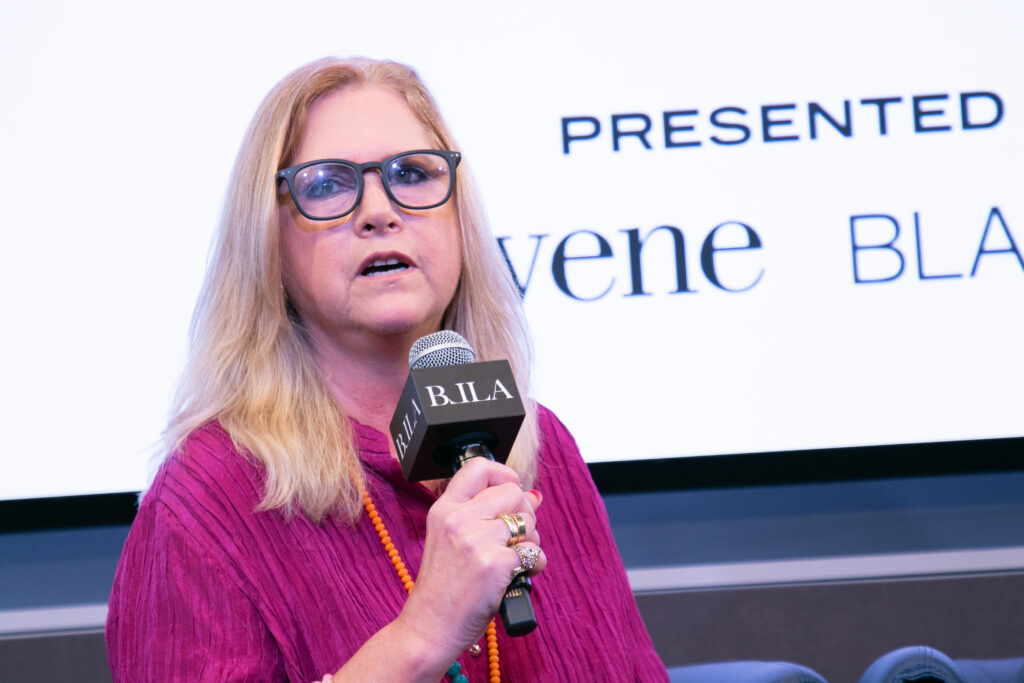
The panel, left to right: Ronit Copeland of HVS Tel Aviv, Samantha Ahuja of Greenberg Traurig, and Tiffany Cooper of Mandarin Oriental.
First, the Definitions
Copeland opened by doing something the industry rarely does well: slowing down to define terms. The confusion between branded residential, condo hotel, rental pool, and rental program is not semantic. It has legal and financial consequences, and Ahuja laid them out plainly.
The core distinction between branded residential and condo hotel is transience. A condo hotel unit can be rented overnight, like a hotel room. Branded residential — particularly at the luxury and ultra-luxury end — typically carries restrictions on how short a rental can be, often six months or a year minimum. That distinction effectively removes the unit from the transient hospitality market and puts it in a different legal and regulatory category entirely.
On the rental pool versus rental program question, Ahuja was direct: “Please don’t say rental pool. Please say rental program.” The difference is not just vocabulary. A rental pool commingles revenues across units, which triggers SEC securities regulations and the disclosure requirements that come with them. A rental program keeps revenues within each individual unit. “You never want to sell real estate combined with a promise of revenue,” she said. “SEC rules carry jail time. They’re very serious.”
Cooper added the historical context. In the mid-2000s, condo hotels were the mechanism everyone used to make the capital stack work. Then 2009 happened, and many of those projects collapsed under the weight of their legal complexity. The industry learned from it — slowly.
Tiffany Cooper, Head of Development for the Americas at Mandarin Oriental
Why Every Project Has a Residential Component Now
Cooper’s number was the one that set the room’s context: 1,077 branded residential projects are currently in the pipeline globally, representing another 14,000 units. Twenty-three percent of those are in the US. The space has grown 180% year over year over the last decade. The fastest-growing segment is not ultra-luxury — it’s upper upscale, brands like Kimpton and the soft brand collections, projected to grow 36% in the next five years.
The reason developers are attaching residential to nearly every hotel project is straightforward: construction costs have made it almost impossible to build a luxury hotel without the residential subsidy. “It’s really the only way you can actually get a hotel built at the cost basis,” Cooper said. Mandarin Oriental’s current Miami development illustrates the logic at full scale. They demolished their existing hotel at Brickell and are rebuilding with 150 hotel keys, 80 branded residential units above the hotel, and a standalone branded residential building adjacent to it. The hotel amenities — wellness, food and beverage, all common spaces — serve the residents without requiring the HOA to carry those costs. “That’s where the hotel and residential really hits its stride,” Cooper said.
The financial structure reflects the blend. Hotels generate long-term returns, what Cooper called “clipping coupons.” Branded residential delivers significant capital upfront, typically within the first three years of sales, which improves IRR in ways a pure hotel play can’t match. “The blending of the two is really the magic bullet right now.”
Her caution: the industry is good at imitation and not always good at innovation. Once a model works, it proliferates. “When we do innovate, then we tend to imitate, and then we just have a lot of products.” The projects that will hold their value are the ones built by operators who genuinely understand how to run both a hotel and a residential program — not those chasing the trend.
Hospitality Brands vs. Lifestyle Brands
The conversation turned to one of the more visible shifts in the branded residential market: the entry of non-hospitality brands. Aston Martin. Bentley. Mercedes. Gucci. Major Food Group. All currently active in the space, particularly in Miami.
Ahuja offered the clearest framework for evaluating these deals. When a hospitality brand like Mandarin Oriental is on the building, the question of who runs it is answered. “They know hospitality. They know what the guests want. They know what the residents are going to want.” When a car brand or fashion house puts its name on a building, those questions don’t answer themselves. Someone still has to operate the hospitality component. The brand provides aesthetic and identity. The management requires a different partner.
Cooper added the market data: 90% of the 1,077 projects in the pipeline are hospitality brands. The non-hospitality brands represent 10%. In a market like Miami — where finding a hospitality brand that hasn’t already been used is genuinely difficult — going to an Aston Martin or a Gucci may be the only differentiation available. In most markets, it isn’t the first call.
Samantha Ahuja, Co-Chair of the Global Hospitality Group at Greenberg Traurig
What Buyers Actually Want
Copeland pushed on buyer motivation: are people purchasing branded residences for service, or for lifestyle association?
For Mandarin Oriental, Cooper said service is table stakes. It’s expected. What buyers are increasingly purchasing is a way of living. “People want to live their lifestyle.” For Mandarin, that centers on wellness — which Cooper was careful to define beyond spa treatments. “There’s a lot of incredible new technologies around longevity and mental and physical performance. People want to live that lifestyle.” The lock-and-leave buyer — jet-lagged, operating across two or three residences, arriving without wanting to think — needs the hotel to show up on service and on amenity without requiring effort.
Ahuja brought the developer’s pressure into focus. Getting units under contract is only part of the equation. In Florida, developers typically need 40% of units sold — not just deposited, but closed — before a lender will fund the construction loan. That means the amenity offering has to be convincing enough to get buyers to close, not just sign. “For all the other product out there, getting the spa, getting the food and beverage amenities, getting whatever other amenities in the project to make it subject to their lifestyle and wanting to put the money down — that’s what all the developers are racing for today.”
Ronit Copeland, Co-Founder and Managing Partner at HVS Tel Aviv
On Miami
An audience member asked the question that was probably on several people’s minds: if finding an unused brand in Miami is already difficult, why does the market keep absorbing product?
Cooper’s answer was a combination of structural and demographic factors. Cost to construct is more favorable in Sun Belt states. Post-COVID, South Florida absorbed a surge of domestic relocation that hasn’t fully unwound. International buyers — from South America, Central America, Mexico, Canada, and beyond — continue to treat Miami as a primary hub. The airport is accessible. The lifestyle is established. “The stars have aligned around Miami.”
She also noted where the pressure is actually going: outward. West Palm Beach. Fort Lauderdale. Naples. The branded residential footprint is expanding up the coast because Miami proper is doing what successful markets do — pushing growth to the edges. Whether every project that’s announced actually gets built is, as she put it, always the question. But the fundamentals, for now, hold.
BLLA’s Boutique Hotel Investment Conference took place on June 3, 2026, at 237 Park Avenue, with an evening program at NeueHouse Madison Square, made possible with the support of Blank Rome and Convene Hospitality Group.