On emerging markets, community as infrastructure, and why the geography of boutique hotel investment has quietly shifted. From the Boutique Hotel I...
BLLA Editorial Team
July 1, 2026 – 10 min read
On emerging markets, community as infrastructure, and why the geography of boutique hotel investment has quietly shifted.
From the Boutique Hotel Investment Conference, June 3, 2026 — Emerging Markets and Opportunities
The panel description for this session opened with a provocation: the investors waiting for calm may be waiting a long time. The ones paying attention are already moving. Thirty minutes later, it was clear that the panelists on stage were not speaking theoretically.
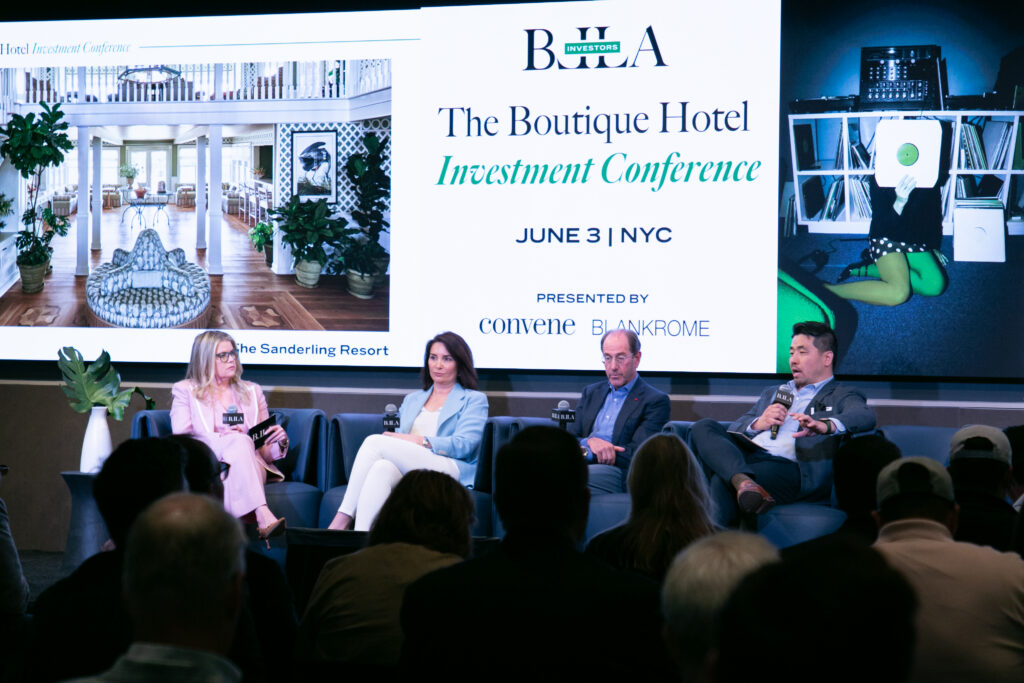
Moderated by Christy Reuter, Real Estate Partner & Hospitality Co-Chair at Blank Rome, the conversation brought together Richard Born, Owner of BD Hotels; Ernest Lee, Chief Commercial Officer at EOS Hospitality; and Deniz Dorbek, Founder of Regulus Collective. The through line was not a list of hot markets. It was something harder to systematize: how you learn to read a place before everyone else does, and what you have to build once you get there.
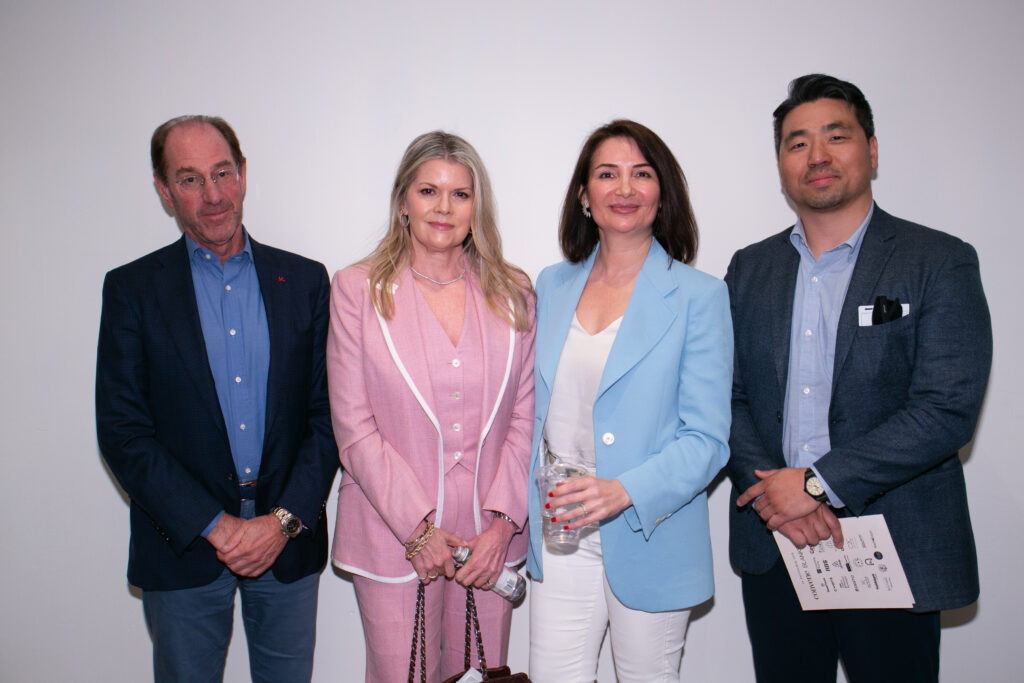
The panel, left to right: Richard Born of BD Hotels, Christy Reuter of Blank Rome, Deniz Dorbekof Regulus Collective, and Ernest Lee of EOS Hospitality.
Attitude Before Amenities
Before the conversation turned to geography, Born reframed the premise entirely. When asked what differentiates a boutique hotel from everything else in the market, he didn’t reach for programming or design or curated experiences. He went somewhere more fundamental.
“I think it starts with the attitude, and then bleeds into the design and the concept.” The problem with branded hotels, in Born’s read, is not that they’re poorly run. It’s that someone in a central office decided how 3,000 properties should speak, behave, and feel. “We break that consistency. We tell people there is no right answer. There’s a right way to answer. We try to empower our people, our family, to speak from the heart and to be genuine and to be real.”
He was direct about what he’s not doing: designing for comfort across a chain. “We try to design things in a way that would make us comfortable, not that would make my other 17 hotels in this chain comfortable exactly the same way.” BD Hotels has, by his account, outperformed its competition in every boutique property it operates. He credits partners, team, and above all attitude.
Ernest Lee added a note of humility to that framing. The mistake a lot of hotel owners make, he said, is treating the property as a destination unto itself. In a competitive market, the hotel is a window to the place. “The window of the destination should be something that draws a unique level of experience — and that requires a sense of humility and curiosity.” The worst version of this is the hotel restaurant designed for hotel guests, engineered around the operation rather than the community. “You alienate a huge constituent pool, and that is a very polarizing experience, and ultimately probably the wrong one.”
The Mercer, Jean-Georges, and What It Means to Renovate Without Anyone Noticing
Born opened with a case study from his own portfolio: the Mercer Hotel in SoHo, which he and his partners built thirty years ago alongside André Balazs. When Covid hit and Balazs moved on, BD Hotels bought him out and was left with a great property and, as Born put it, no vision.
The renovation that followed was designed to honor what was there. “My daughter, who is my number two, tells me how to spend $25 million and not have anybody notice — which is what we did.” The bigger decision was the restaurant. Jean-Georges had run the Mercer Kitchen since 1996, and it had been groundbreaking. But the advice Born got was clear: if you want to resonate with people under 40, it’s not going to be Jean-Georges. So he made the call.
“I asked Jean-Georges to leave. He was absolutely wonderful about it — hugged me and kissed me and thanked me for the experience.” Born then made one phone call to Scott Sartiano, who had built Zero Bond three blocks away and had long wanted to open a restaurant rooted in something personal. The deal was done in four minutes. The reason it worked, in Born’s telling, was simple: “When you put your name on something, you have skin in the game.”
The lesson he drew from it applies beyond the Mercer. His greatest talent, he said, is not vision. It’s finding people who have it.
From emerging markets to community as infrastructure, the discussion explored what it takes to recognize opportunity before the rest of the market catches up.
Where the Opportunity Actually Lives
Deniz Dorbek works with investors across EMEA, Southeast Asia, South America, and the US, and her framework for identifying emerging markets is worth sitting with. She’s not looking at where capital is flowing. She’s looking at where friction is starting to resolve — specifically, the convergence of three conditions: suppressed structural demand, an underserved local community, and an operating environment that’s turning a corner.
“When these three things converge, there’s usually a very narrow window. That holds the biggest opportunity.”
Her current list spans more ground than most investors are tracking. In EMEA, Albania — nearly 12 million visitors last year, only 18% of whom stayed in a formal hotel. Global brands are entering now, domestic operators are scaling, and the window is open. In Southeast Asia, Vietnam is seeing 36% year-over-year growth in domestic travel alone, driven by lifestyle shifts and evolving expectations. India’s Tier Two and Tier Three cities are seeing 70% more global brand signings, not because the destinations are newly discovered, but because domestic demand has become undeniable.
In South America, Colombia and Peru are leading. Medellín, specifically, is a city Dorbek describes as one of the most energetic in the hemisphere — but the hotel supply is bifurcated between luxury product for international travelers and economy product for volume domestic travel, with almost nothing in between. That gap, she said, is exactly where the investment thesis sits.
And in the US, where many international investors assume the market is mature, Dorbek is watching Detroit, Tulsa, Pittsburgh, and Dayton. “The local community is growing, and all the artists, the entrepreneurs, the intellectual community — they’re there. They need their gathering places. It’s a perfect environment for boutique investment.”
Her caution about how to read timing: if everyone in the room is talking about the same market, it’s probably too late. And if a government is coming with a long list of incentives, she questions what that signals about the underlying opportunity.
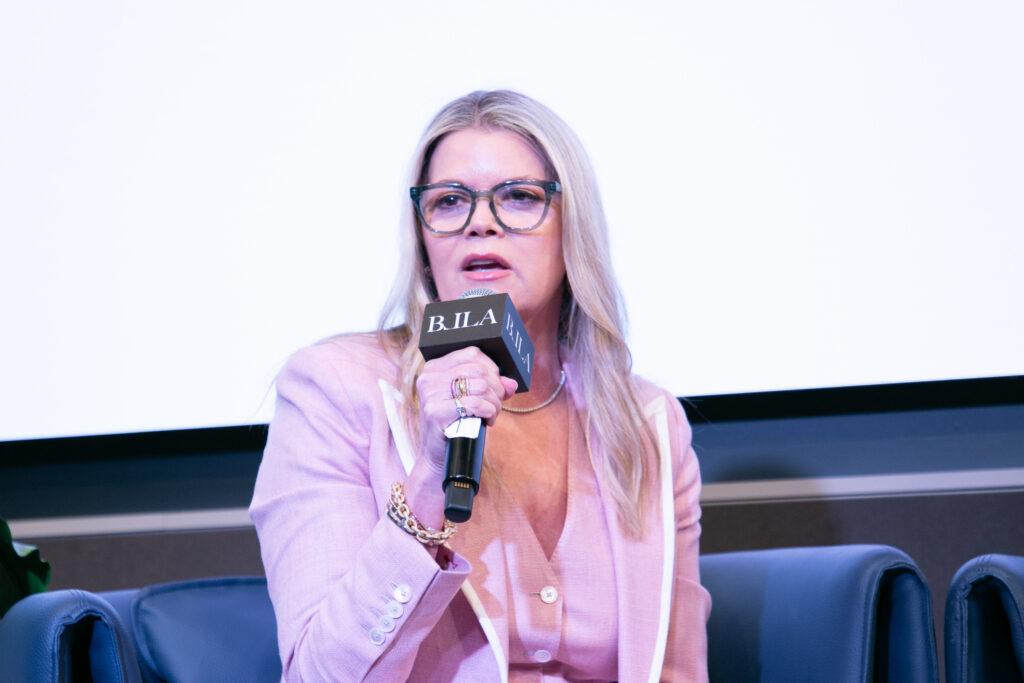
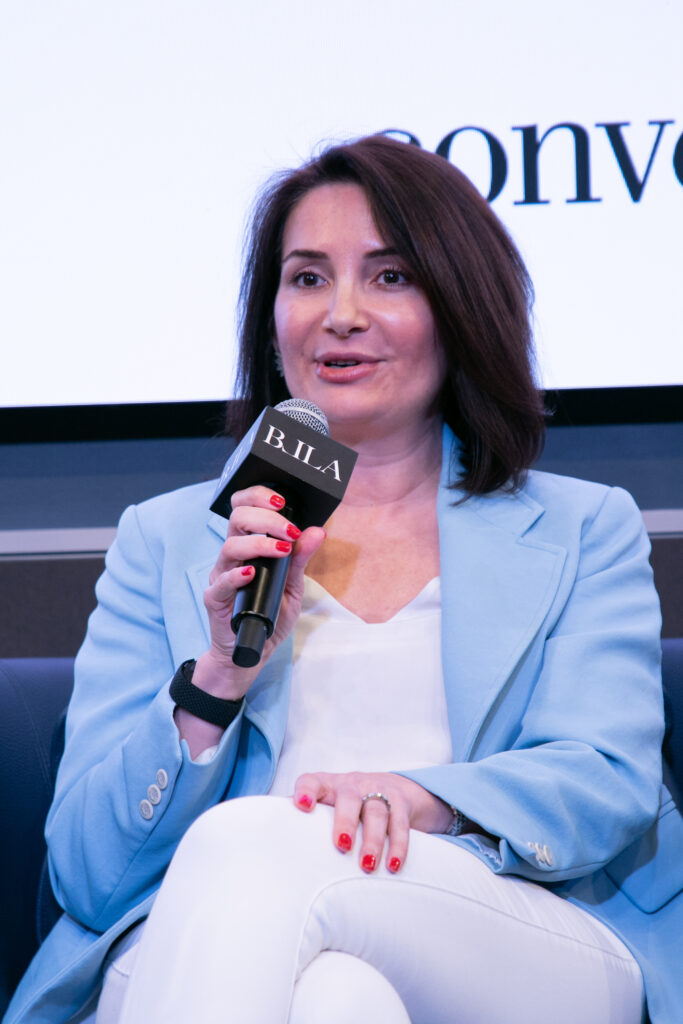
Christy Reuter, Real Estate Partner & Hospitality Co-Chair at Blank RomeDeniz Dorbek, Founder of Regulus Collective
Community Isn’t a Feature. It’s the Foundation.
All three panelists came back, at different points, to the same idea: the community around a hotel is not a marketing asset. It’s the thing that makes the concept endure.
Dorbek was the most direct about what this requires. “Local market knowledge is essential, and this is not something you can buy. You need to earn it.” The clearest signal that a market is ready is when the artists, entrepreneurs, and intellectual class start building businesses there. The hotel that opens in that moment grows with the community — and the community protects it. “People will really protect your hotel more than you do. That’s what makes those concepts future proof.”
She named what this looks like in practice: the architecture firm bringing a client in every week, the creative company doing their annual events in the space, the regulars who show up on a Tuesday night in November. “You still need someone who shows up in your bar on Tuesday night in November. That’s your community.”
Lee described EOS Hospitality’s approach at Isabella, their hotel in Marathon, Florida. They partnered with a local conservation organization called CRMA, which takes guests out for beach cleanups and mangrove restoration work. What guests receive, beyond the feel-good moment, is the actual story of the Florida Keys — from people who live it. “They’re getting much more history about the Florida Keys. They’re getting more stories about what the locals actually like in terms of their bars and favorite restaurants and favorite things to do that you can’t get from any duck boat tour.” It’s hard to replicate, Lee said, but you can only get there through smart partnerships.
Why Richard Born Is Looking at Dallas
Born explained BD Hotels’ expansion logic with his characteristic directness. West Palm Beach attracted him because of the demographic shift — the tens of thousands of young finance professionals moving into the market who represent exactly the culture BD Hotels has spent four decades building in New York. A civic leader there told Born at the groundbreaking that West Palm Beach didn’t need him to make it cool. Born’s response: “Of course not. You have a Chuck E. Cheese here. Why would you need me?”
Dallas came up more recently. Born spent time there, observed the market, and arrived at a specific read. “It’s a city that yearns for New York.” The moneyed Dallas community has sophistication, but it looks to New York for restaurants, culture, theater. New York City restaurants are starting to open there. For BD Hotels, that kind of cultural appetite is the signal worth following.
The through line in his expansion thinking is not a framework — it’s a feeling about fit. “We are opportunistic. We don’t say to ourselves we want to build in Florida, California, Texas, uptown, downtown. We look for opportunities.” What he’s chasing is a place that is ready for what BD Hotels is.
Richard Born, Owner of BD Hotels & Ernest Lee, Chief Commercial Officer at EOS Hospitality
What to Look For Before You Move
Lee laid out the criteria EOS uses when evaluating a new market: demographic trends with permanence, public investment in infrastructure, institutional commitment to job creation, and strong CVB or DMO support for tourism. Beyond the macro, he’s looking for an aptitude for experience-driven consumerism — a local population that wants to engage with service, hospitality, and what a city has to offer.
Dorbek’s version of due diligence is more relational than analytical. She’s looking for philosophical alignment with local partners — not transactional alignment, but shared understanding of what long-term success looks like. “Alignment is critical. When alignment compounds, we know misalignment compounds faster.” The partners who matter most in an emerging market are the ones who see the same opportunity you see, at the same time, for the same reasons.
The session closed without tidy conclusions, which felt right. Emerging markets don’t offer certainty. What they offer, as the panel description put it, is exactly the gap between where capital has been and where culture is heading — and that gap, for the operators in this room, is where the work gets interesting.
BLLA’s Boutique Hotel Investment Conference took place on June 3, 2026, at 237 Park Avenue, with an evening program at NeueHouse Madison Square, made possible with the support of Blank Rome and Convene Hospitality Group.