What three F&B operators said about culture, concept, and the economics of making people want to come back. From the Boutique Hotel Investment ...
BLLA Editorial Team
July 3, 2026 – 9 min read
What three F&B operators said about culture, concept, and the economics of making people want to come back.
From the Boutique Hotel Investment Conference, June 3, 2026 — The Other Side of Hospitality: Food & Beverage
There’s a version of hotel food and beverage that everyone in this industry recognizes: the restaurant designed for hotel guests, engineered around the operation, priced to optimize the P&L, and avoided by anyone who lives nearby. The panelists in this session have spent their careers building the opposite of that — and the conversation they had about how, and why, was one of the more honest exchanges of the day.
Moderated by Stacy Pilkington, Senior Recruiting Partner, Global Luxury at Gecko Hospitality, the panel brought together John Meadow, Founder and President of LDV Hospitality; Jennifer Vitagliano, Co-Founder of Elizabeth Street Hospitality; and Adam Saper, Principal of F&B/Hospitality at Emerson Hospitality. Between them: dozens of restaurants, several hotels, one recently sold concept, one Argentine chef being brought to New York, and a running debate about whether to keep breakfast service.
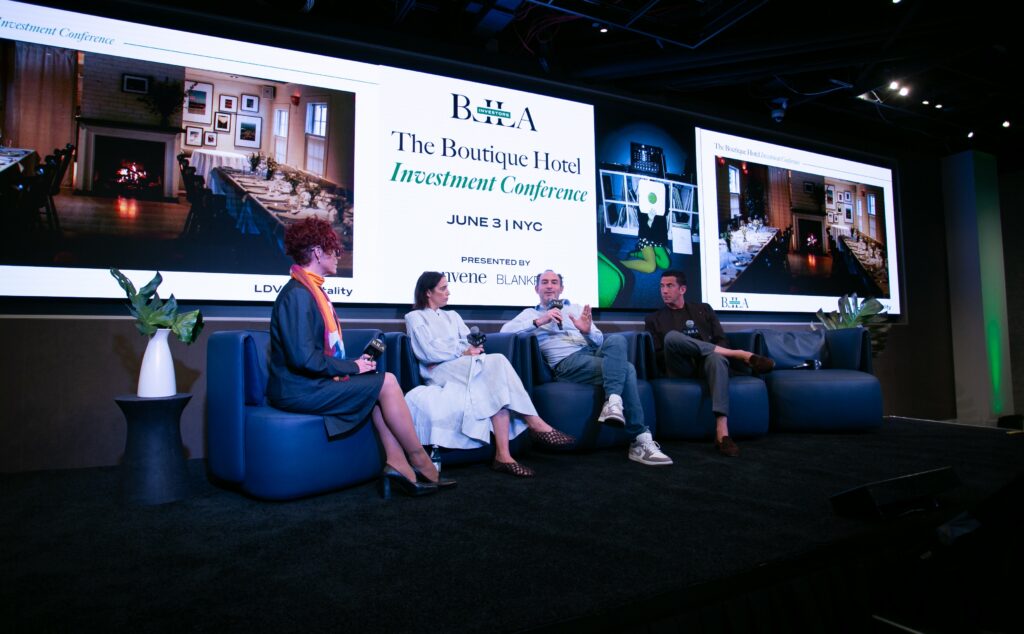
The panel, left to right: Stacy Pilkington of Gecko Hospitality, Jennifer Vitaglianoof Elizabeth Street Hospitality, Adam Saper of Emerson Hospitality, and John Meadow of LDV Hospitality.
Concept vs. Culture
The first question Pilkington put to the panel was the one the whole session kept returning to: what’s the difference between a concept and a culture?
Saper’s answer came from something he’d watched happen across multiple projects. “When you see a team bought into something — you can put any spreadsheet, but when you’ve bought into the concept, you get a team who want to be there and believe in what you’re doing, you see that change.” The inverse is equally visible. “You can put whatever graphics you want on the wall, you can have a great menu, it won’t matter” if the team isn’t genuinely invested.
He offered the ratio he’d arrived at after years in the business. When he wasn’t in food, he assumed restaurants were 80% food, 20% everything else. “Then I got into food, and unfortunately I was kind of depressed. It’s actually the opposite.” The food matters. But it’s everything else — the feeling, the people, the reason someone returns a second and third time — that makes a restaurant real. “Authentic means there’s a culture, not just a concept. The people have bought into it. That is the difference.”
Meadow put the geographic dimension on it. When Scarpetta, LDV’s flagship, operates at the Hotel Seville in Nomad, he locks the front door for breakfast. “I don’t want anyone in this room to come there for breakfast. Breakfast is a service for the hotel guests that will lose money and not showcase our core DNA.” At the Bulgari in London, Scarpetta serves breakfast until 2 AM, “because it’s a crazy rate and ultimately it feels like a hotel restaurant.” The point isn’t that one is right and one is wrong. The point is that intention has to be decided before anything else. “If it’s a hotel amenity restaurant and that’s what you want, that’s what you’ll have. If you want a locals restaurant, that comes with certain concessions.”
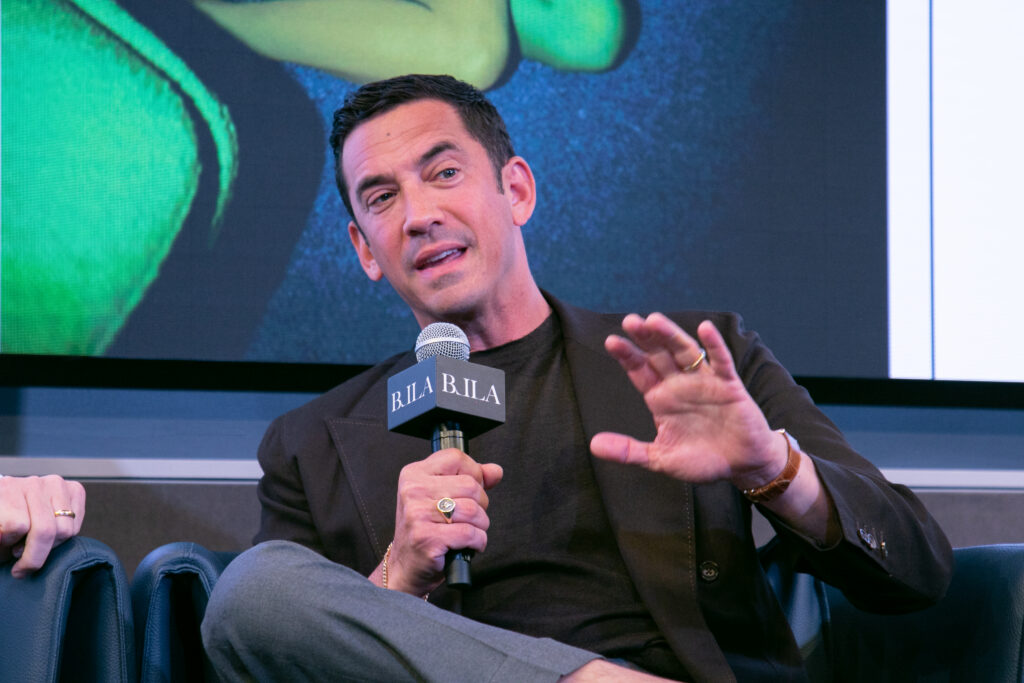
John Meadow, Founder and President of LDV Hospitality
The Mercer Kitchen, Revisited
The session offered a window into one of the more consequential F&B decisions in recent New York hotel history. When BD Hotels bought out André Balazs and took full ownership of the Mercer, they inherited Jean-Georges Vongerichten’s restaurant, which had been groundbreaking when it opened in 1996. The advice Richard Born received was unambiguous: if you want to connect with guests under 40, Jean-Georges isn’t the answer. So he made the call.
Born, who joined the conversation briefly as a reference point, described calling Scott Sartiano — who had built Zero Bond three blocks away — and closing the deal in four minutes. The reason it worked: Sartiano put his name on it. Skin in the game. The lesson isn’t about Jean-Georges or Sartiano. It’s about the clarity of knowing what the restaurant needs to be and finding the person who was already building that thing, not manufacturing it from scratch.
Building the Thing People Come Back To
Vitagliano’s framing of what her restaurants are trying to do was precise. “There are restaurants that people will go to once for the Instagram. We try to create restaurants that have a sense of permanence, where people will form habits and memories around our restaurants and come multiple times a day, multiple times a week.”
The signals she watches for: guests celebrating holidays there. Regulars who start conversations with the table next to them. The playlist landing at the right moment. “That means you’ve got their loyalty. You’ve become their place.” She was clear that this doesn’t require budget. “It’s just investing in the right people who believe in hospitality” — people who remember where a guest likes to sit, what they were drinking last time, what they mentioned in passing. “Those little hospitality moments go really far.”
Meadow grounded the same idea in the economics of the lobby. LDV operates 20 bars and restaurants, only three of which are not in hotels. The opportunity he keeps coming back to is the lobby hang — converting the person killing time into someone who stays for a martini, a meeting, a second coffee. “That’s the beauty of hotels.” But it only works if the human element is already there. “Some do it fantastically well. To Adam’s point, when it’s ‘what’s the concept,’ you’ve already lost.”
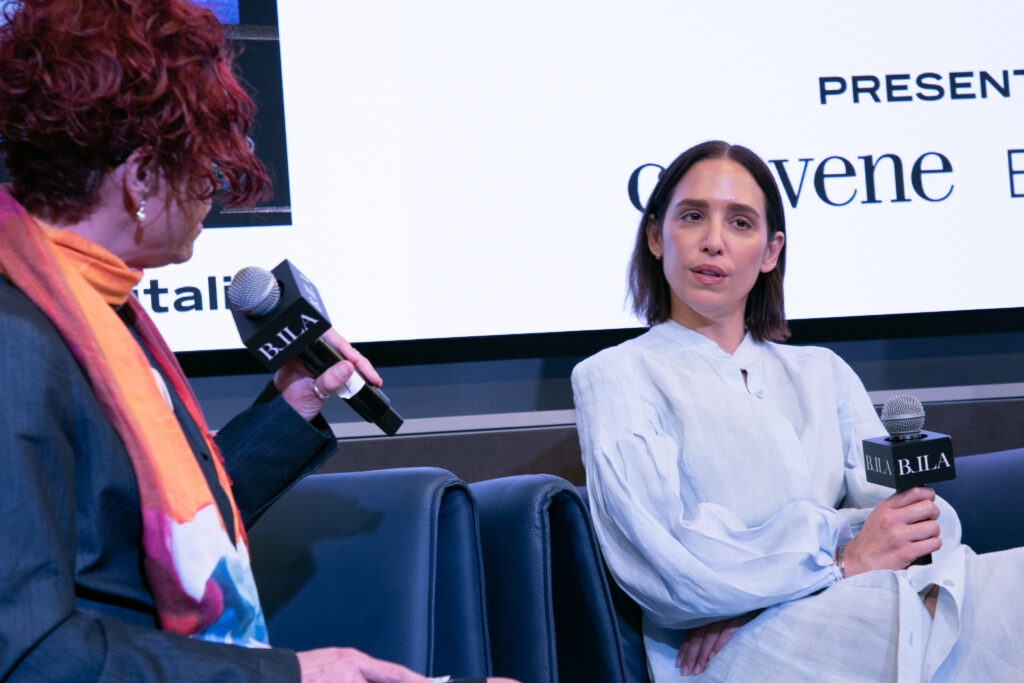
Stacy Pilkington, Senior Recruiting Partner, Global Luxury at Gecko Hospitality & Jennifer Vitagliano, Co-Founder of Elizabeth Street Hospitality
Where the Revenue Actually Is
When Pilkington asked the panel about underrated revenue opportunities, Meadow went straight to private events. The old conference room model is gone. “The pharmaceutical luncheon — they want a restaurant feeling.” LDV has converted meeting rooms into private dining rooms that feel like extensions of the restaurant itself. “Offering a restaurant experience in private function enhances the sale, enhances the price point. It’s a real snowball effect.”
Vitagliano’s answer was about extending the brand beyond the four walls. At Rafs, it’s merchandise. At Musket Room, it’s hot sauce. She pointed to Ace Hotels as a benchmark: “People buy their lighters and their ashtrays and their soaps who have never visited their properties, because it’s just such a sense of place and authenticity.” The guest who can’t afford dinner can come for a $6 croissant. “It’s a little piece of the brand that you can bring home.”
On delivery: a clean no from Meadow and Vitagliano. Saper gave a more nuanced read — for quick service or hybrid grocery concepts it can work, but for full-service restaurants, “you don’t want to be relying on delivery.”
On breakfast: Meadow called it a loss leader, full stop. Vitagliano acknowledged it’s the slowest service at Rafs, but kept it because the bakery is core to the concept and drives multiple revenue streams — wholesale, retail, merchandise — that justify the labor. Saper, who has been telling her to cut it for eighteen months, admitted he loves coming as a customer.
The Economics, Without the Romance
The session’s most grounding moment came when the audience pushed on profitability targets. Saper was direct: 15 to 20% net margin is the target, inclusive of all costs, and it hasn’t changed. “You’re not going to target 8%. That’s crazy. You’ve got to build it in and be conservative in your models.” Meadow added the floor: if a hotel restaurant can’t do $10 million in F&B revenue, LDV can’t make the math work for either party. “That’s just the reality of the dynamic.”
The cost pressure driving those numbers is almost entirely labor. “It doesn’t matter whether I serve you a steak or a carrot,” Saper said. “I need the same amount of money. Restaurants are hotels for chairs today in terms of cost structure. We are renting that chair.” The question is what happens while the guest is in it.
On deal structures, Meadow and Vitagliano landed in different places. Vitagliano won’t take a lease in a hotel at this stage — only a partnership structured as a management deal. Meadow’s best deals have been leasehold positions, but he’s selective. “If it doesn’t do X in volume, it’s never going to work.” Both agreed the discipline required post-COVID is different from anything that came before.
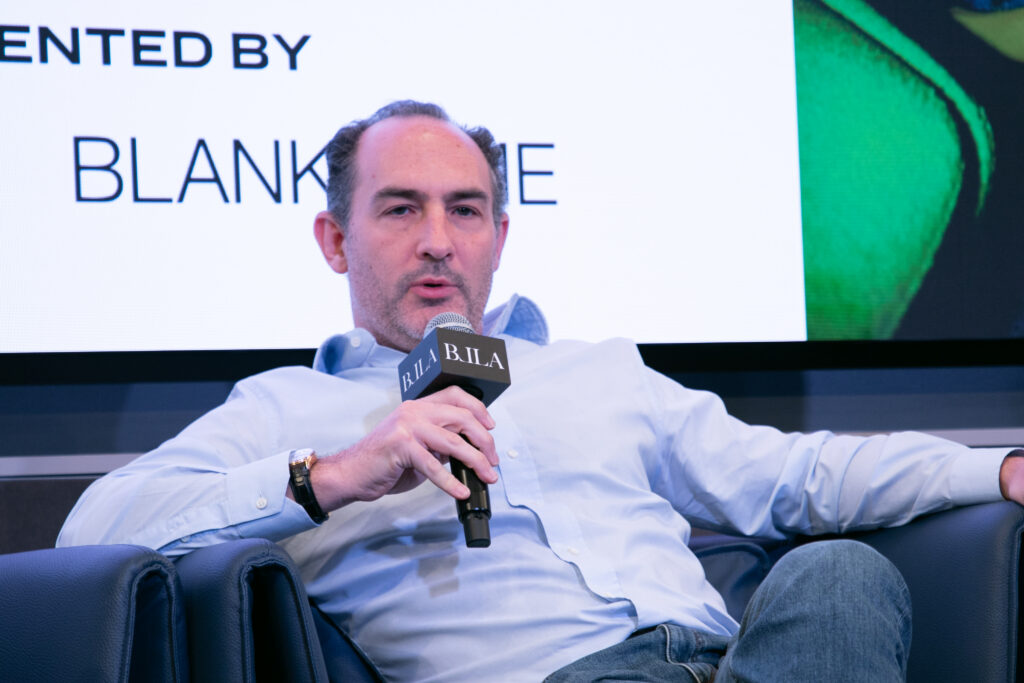
Adam Saper, Principal of F&B/Hospitality at Emerson Hospitality
Members Clubs, Workforce Housing, and What Integration Actually Looks Like
The conversation widened toward the end. On members clubs: Vitagliano’s group spent two years developing four concepts inside a private members club in Union Square, brought in from London. Her read on what’s happening in New York is clear-eyed. “There are so many members clubs in New York now that are effectively the new form of a velvet rope.” Meadow agreed that the model works when the commitment is real — “bricks and mortar realities brought to life by heartfelt hospitality” — and gets played out when it’s $3,000 to get behind a rope.
On integration between hotel and F&B operations: Saper is testing a different thesis with Emerson Hospitality’s 70-room hotel in the Hudson Valley, where F&B is front and center in the management structure, not outsourced. “If you can do it right, you should be able to come up with a much more cohesive team, less management, and better management across the board.” He’ll know in fourteen months.
The question that closed the session came from the audience: are you thinking about workforce housing for projects outside city centers? Saper’s answer was immediate. The Hudson Valley project included the acquisition of 50 units in an adjacent building — originally staff housing from the early 20th century — that will be converted into workforce housing as part of the deal structure. “If you offer people good housing, that’s 100% yes.” For anyone building in markets where talent doesn’t already live nearby, it’s not a nice-to-have. It’s the deal.
BLLA’s Boutique Hotel Investment Conference took place on June 3, 2026, at 237 Park Avenue, with an evening program at NeueHouse Madison Square, made possible with the support of Blank Rome and Convene Hospitality Group.